


Over 300 million people worldwide live with a rare disorder, yet fewer than half receive a genetic diagnosis and over 95% lack disease-specific treatments. Current diagnostic approaches focus largely on protein-coding regions, missing important variants in non-coding exonic regions such as untranslated regions and non-coding RNAs. Studying these regions can uncover new diagnoses, reveal disease mechanisms, and accelerate the development of targeted therapies.
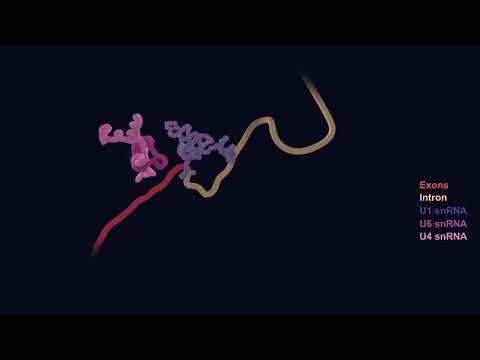
One proposed mechanism for ReNU syndrome is disrupted pre-mRNA splicing within the spliceosome. This video illustrates that theory by showing how pathogenic RNU4-2 variants may alter spliceosome function, leading to errors in RNA processing and, ultimately, disease. While this is one hypothesis supported by current research, the full disease mechanism is still being investigated.
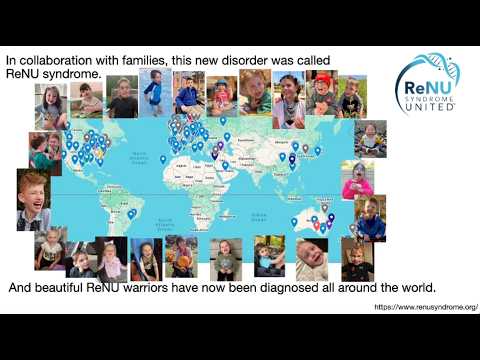
Nicky Whiffin explains how our genes function and how changes in those genes can lead to rare conditions such as ReNU Syndrome.
Human DNA contains tens of thousands of genes, many of which provide instructions for making proteins—the essential “workhorses” that enable cells to function properly. These instructions are carried out through a process where DNA is transcribed into messenger RNA (mRNA), which is then translated into proteins.
When a gene is altered, the resulting protein may not function as expected. In ReNU Syndrome, these genetic changes disrupt normal protein activity, which can interfere with critical developmental pathways—particularly those involved in brain development and cellular regulation. This disruption can lead to a range of neurological and developmental features observed in affected individuals.
To better understand these effects, researchers used CRISPR gene-editing technology to introduce specific genetic variants into cellular or model systems. This allowed scientists to replicate the exact mutation seen in individuals with ReNU Syndrome and directly observe how it alters protein function and downstream biological processes. By comparing normal and edited systems, researchers are identifing the mechanisms driving the condition.
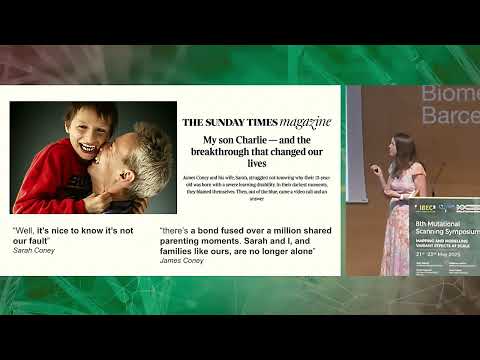
Nicola Whiffin presents "Interpreting variation in small nuclear RNAs in neurodevelopmental disorders" at the 2025 Mutational Scanning Symposium

n-Lorem 2025 Nano-rare Patient Colloquium Poster Session
Wei Zhang, Ph.D., MPA Associate Director of Core Research
Mutations in U-rich RNAs are increasingly recognized as drivers of NDDs. Although their short length and structured nature presents challenges, ASO technology offers a unique therapeutic opportunity. This work focuses on a recently identified mutation in RNU4-2, highlighting its functional characterization and n-Lorem’s therapeutic strategy to address toxic effects.
Recorded at St Anne's College, University of Oxford on 29th April 2025.
This event brought together key people involved in the discovery of ReNU syndrome, a condition affecting development and learning which was first identified last year yet potentially impacts tens of thousands of families across the world.
Hearing from experts involved in the discovery, this event reflected on the importance of genomic diagnosis for rare conditions and the factors necessary both to identify new conditions, and to learn about what they might mean for patients and families.
The focus of the evening was around the discovery process and the broader implications of receiving a genetic diagnosis, rather than specific practical implications of a ReNU syndrome diagnosis. Where speakers give permission, talks will be available on our website shortly after the event.

🚀 New Episode Alert – RareMind: Podcast on Genomics & AI
🎙️ Episode 3 is live now: ReNU Syndrome – RNU4-2 Mutations and Neurodevelopmental Disorders
🧬 In this episode, we explore how RNU4-2, a non-coding RNA gene integral to the major spliceosome, has been identified as the cause of ReNU Syndrome, a newly recognized neurodevelopmental disorder.
🧠 Recent studies uncovered rare de novo variants clustered in an 18-base pair region of RNU4-2, associated with a consistent clinical phenotype: intellectual disability, microcephaly, short stature, and motor delay. These variants disrupt splicing fidelity and highlight the role of non-coding RNAs in the pathogenesis of rare disease.
🔬 This episode reveals how the search beyond protein-coding regions is reshaping our understanding of spliceosomal disorders and driving forward rare disease diagnostics.
🎧 Tune in now and be part of the growing movement transforming RNA biology into clinical insight.
#Genomics #RareDisease #RNA #Neurodevelopment #Spliceosome #ReNU #NonCodingRNA #Podcast #RareMind
28 February 2026
Rare diseases affect 1 in 12 Canadians: Toronto family shares diagnosis experience